Emergencies in apartment buildings are not rare, and they never come at a convenient time — and the difference between a manageable incident and a genuine crisis is almost always whether the building was prepared.
A burst main floods the basement at midnight. A storm takes out the power, and with it the lifts, leaving residents stranded upstairs. A fire alarm sends a hundred people into the street at 2am. After thirty years managing Sydney buildings, here’s what real preparedness looks like.
Why Apartment Buildings Are Different in an Emergency
An emergency in a house affects one household who can usually just leave. In an apartment building, one event affects dozens or hundreds of people who share exits, lifts, power and water — and who may include elderly residents, people with mobility limitations, families with young children, and residents who don’t speak English as a first language. A power failure isn’t just inconvenient; it can strand vulnerable people upstairs. A flood doesn’t affect one room; it can knock out the plant that serves the whole building. Scale and shared systems are what make apartment emergencies their own category.
The Emergencies Worth Planning For
Preparedness starts with knowing what you’re preparing for. The common ones:
- Fire. The most serious, and the one with the most established response — evacuation procedures, working fire systems, clear paths of travel, and residents who know what to do.
- Flood and water. Storms, burst mains and stormwater failures that can flood basements and knock out plant, pumps and electrics.
- Power failure. Blackouts that stop lifts, security systems, lighting and sometimes water pumps — stranding residents and disabling the building’s systems.
- Storm damage. Wind and water damage to roofs, facades, windows and grounds that needs fast response to prevent it worsening.
- Lift entrapment. Residents trapped in a lift, needing a fast, known response — not a scramble to work out who to call.
What Being Prepared Actually Means
Preparedness isn’t a document in a drawer — it’s a set of things that are already true when the emergency hits. The building has current emergency and evacuation procedures that residents actually know. The fire systems and safety measures are maintained and working, not just certified on paper. There’s a clear after-hours response arrangement, so a 2am flood reaches someone who acts, not a voicemail. Emergency and after-hours contacts — for the building manager, key trades, utilities and services — are known and to hand. And critically, someone has thought in advance about the residents who’ll need help: who might be stranded by a lift outage, who can’t easily use stairs.
The After-Hours Reality
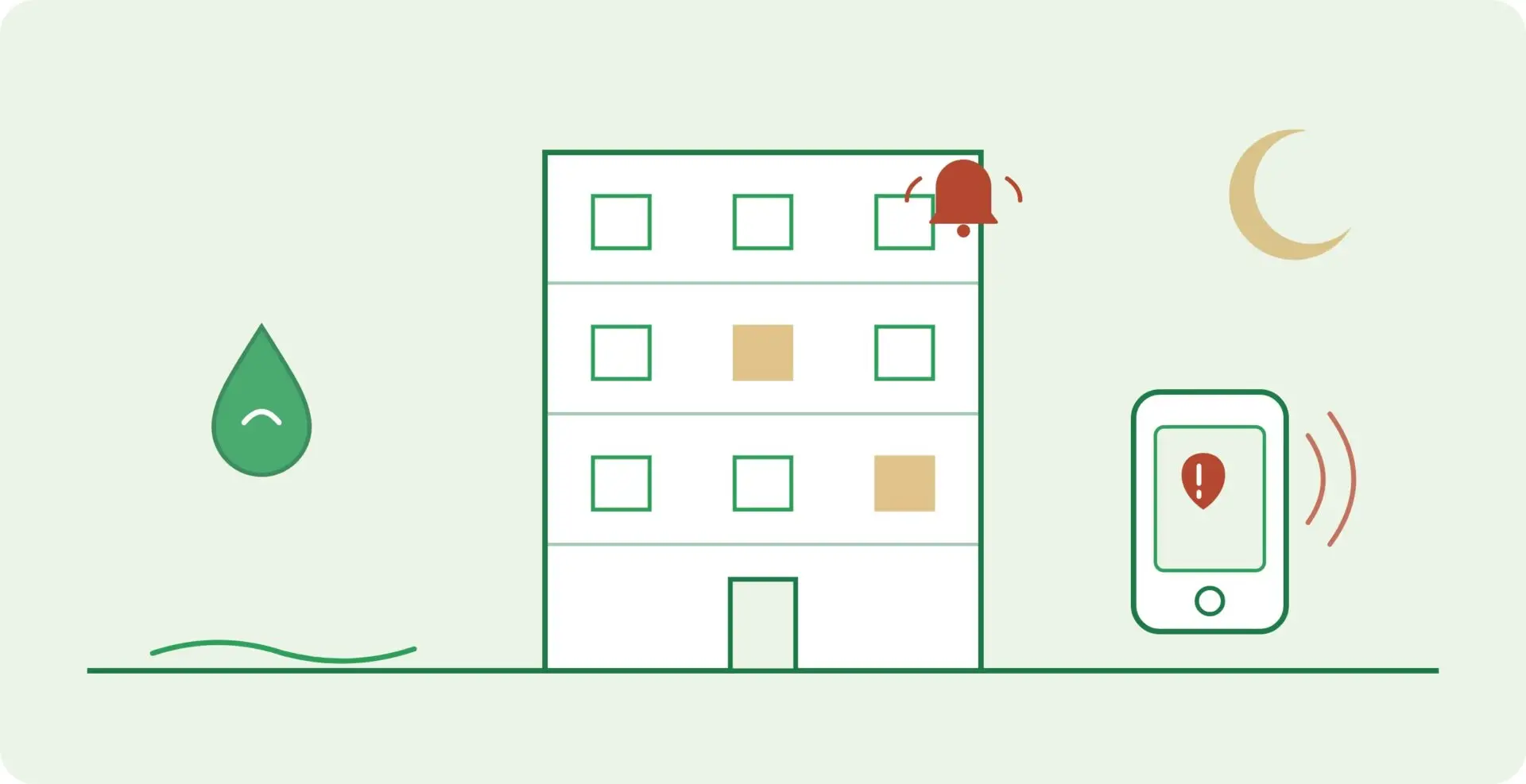
Most serious emergencies happen outside business hours — that’s simply when there’s no one around to catch the early warning. This is why a genuine after-hours response arrangement is one of the single most valuable things a building can have. When the pump fails on a Sunday night, the difference between a contained incident and a flooded basement is whether someone reaches the building fast and knows what to do. A defined after-hours response, with the right contacts and authority to act, is preparedness in its most practical form.
After the Event
Preparedness also covers what happens once the immediate emergency passes: making the building safe, getting the right trades in fast to stop damage worsening, coordinating any insurance response, keeping residents informed, and restoring services. A building that responds well in the first hours — containing damage, communicating clearly — comes through an emergency far better than one that scrambles. And every event is a chance to learn: what worked, what didn’t, and what to fix before next time.
Where a Building Manager Fits In
Emergency response is one of the clearest reasons buildings value on-the-ground management. We keep emergency and evacuation procedures current, ensure the fire and safety systems are genuinely maintained, hold the after-hours response and the emergency contacts, respond fast when something happens — containing damage, getting the right trades in, keeping residents informed — and manage the aftermath and recovery. The owners corporation and strata manager handle governance, budgets and insurance decisions; the building manager is the one who acts in the moment, when acting fast is everything. Preparedness is quiet work that’s invisible right up until the night it matters more than anything else.
Frequently Asked Questions
What emergencies should our building plan for?
The common ones are fire, flood and water damage, power failures, storm damage and lift entrapments. Each affects a shared building and its systems differently, and planning means having current procedures, maintained safety systems, a real after-hours response, and known emergency contacts before any of them happens.
Why is after-hours response so important?
Because most serious emergencies happen outside business hours, when there’s no one around to catch the early warning. A genuine after-hours arrangement — where an incident reaches someone who can act quickly, rather than a voicemail — is often the difference between a contained incident and major damage. It’s preparedness in its most practical form.
What should we do about residents who can’t use the stairs?
Think about them in advance. A power failure or lift outage can strand elderly residents or people with mobility limitations upstairs, so knowing who might need help, and having a plan to check on and assist them, is a key part of preparedness. This is exactly the kind of thing that’s obvious in hindsight and invaluable if planned beforehand.
Do we need a formal emergency plan?
Fire and evacuation procedures are a baseline expectation, and broader emergency preparedness — covering floods, power and storm response, after-hours contacts and vulnerable residents — is strongly advisable for any building. What matters is less the document and more that the procedures, maintained systems and response arrangements are genuinely in place and known before an emergency, not improvised during one.
Make Sure Your Building Is Ready
Building Management Australia is a Sydney building management firm — not a strata agent. Keeping emergency procedures current, safety systems maintained, and an after-hours response ready — and acting fast when something happens — is core building-management work, and we handle it alongside your strata manager.
If your building isn’t confident it’s ready for the 2am emergency, request a proposal at bmaus.com.au or email Andrew directly at andrew@bmaus.com.au.
About the Author
Andrew Veron is the founder of Building Management Australia (BMA), an independent Sydney building management firm established in 1995. BMA is a building management company — not a strata agent — providing on-site and visiting building management, facilities management, concierge, cleaning and valet services to residential, commercial and mixed-use properties. Over the past 30 years, Andrew and the BMA team have managed buildings across the Eastern Suburbs, North Sydney, Inner Sydney, Parramatta and the Sydney CBD, with assets currently valued in excess of $3 billion under management. Because BMA is independent of any strata management firm, committees receive unbiased advice and transparent contractor relationships. Reach Andrew at andrew@bmaus.com.au or bmaus.com.au.