Pests don’t respect lot boundaries — which is why treating a single unit and hoping for the best is one of the most reliably futile things a building can do.
A cockroach problem that starts in one apartment travels through wall cavities, pipe risers and shared voids into a dozen others. Pest management in strata is a building-wide job or it’s nothing. After thirty years managing Sydney buildings, here’s how it actually works.
Why Apartments Are Different
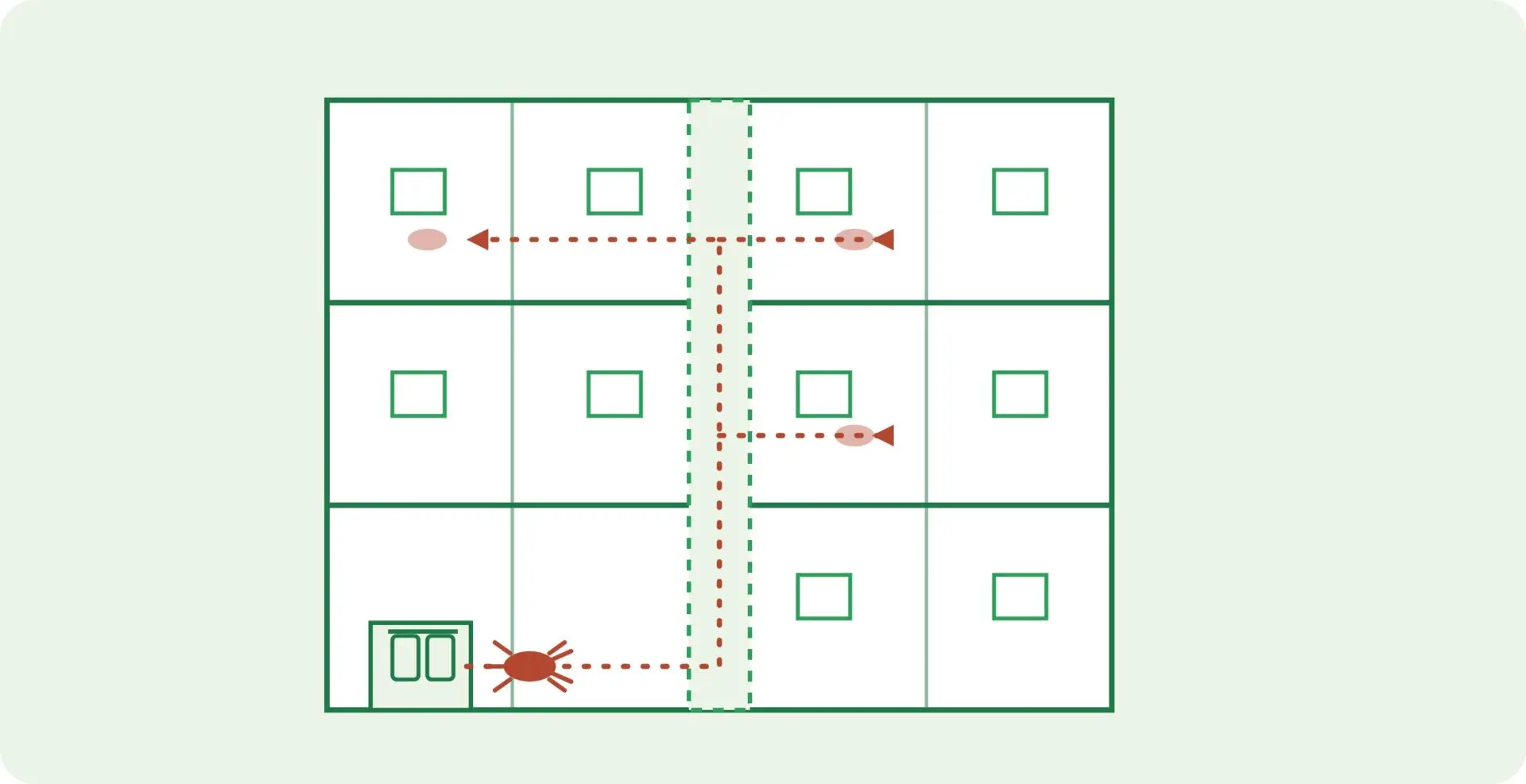
In a house, a pest problem is contained to one property with one owner who deals with it. An apartment building is a single connected structure with shared walls, floors, ceilings, pipe risers, cable ducts, waste systems and voids — a network of highways from one lot to the next. Pests use all of them. That connectivity means an infestation is rarely one apartment’s problem for long, and treatment that ignores the shared structure just moves the problem next door.
The Usual Offenders
- Cockroaches. The most common by far, thriving in kitchens, waste areas and the warm, damp voids between lots — and moving freely through risers and cavities.
- Rodents. Drawn to bin rooms and waste, nesting in voids and basements, and capable of causing real damage to wiring and insulation.
- Ants. Seasonal, persistent, and usually a symptom of food and moisture access.
- Termites. Less common in concrete high-rise but a serious structural threat where they occur, particularly in older or lower-rise buildings with timber elements.
- Birds and possums. Roosting and nesting in roof spaces, balconies and plant areas — a mess and, sometimes, a health issue. Note that native wildlife is protected and must be handled appropriately.
Who’s Responsible?
The general principle follows the usual common property versus lot line. Pest issues arising from or affecting common property — bin rooms, basements, shared voids, the building’s structure and grounds — are generally the owners corporation’s. Pests confined to the inside of a single lot are generally the owner’s or occupier’s to deal with. As always, the specifics depend on the source and on your registered strata plan and by-laws.
But there’s a practical reality that matters more than the legal line: because pests travel through the shared structure, a strict ‘your lot, your problem’ approach usually fails. The infestation simply relocates. Buildings that treat pests as a shared issue — coordinating treatment across common property and affected lots — solve them; buildings that stand on responsibility lines watch them recur indefinitely.
Why Building-Wide Treatment Wins
Effective pest management in a connected building means treating the common property, the voids and risers, and the affected lots together, so there’s nowhere for the population to retreat to and return from. It also means treating the source rather than the symptom — pests are always telling you something about food access, moisture or entry points. A cockroach problem in a building with a poorly managed bin room isn’t a cockroach problem; it’s a waste-management problem with cockroaches attached.
Prevention Is Mostly Housekeeping
The single biggest lever isn’t chemical, it’s operational. Bin rooms kept clean and bins closed. Waste collected on schedule so it doesn’t accumulate. Food waste managed properly — and worth noting, the coming FOGO changes add a food-organics stream that will need careful management precisely because it’s attractive to pests if handled poorly. Moisture and leaks fixed rather than tolerated. Entry points — gaps, cracks, penetrations — sealed. Grounds maintained so vegetation isn’t a bridge into the building. Most pest problems in apartment buildings are housekeeping problems that grew legs.
Where a Building Manager Fits In
Pest management is exactly the kind of shared, ongoing operational problem a building manager exists for. We run the preventative pest program across common property, keep the housekeeping — bin rooms, waste, moisture, entry points — that prevents infestations in the first place, coordinate building-wide treatment when something takes hold rather than letting it be fought lot by lot, arrange access across affected apartments so treatment actually works, and address the underlying source rather than just the symptom. The owners corporation authorises the spend and the strata manager handles any responsibility disputes; the building manager makes sure the building is treated as the single connected structure it actually is.
Frequently Asked Questions
Who pays for pest control in a strata building?
Generally, pest issues arising from or affecting common property — bin rooms, basements, shared voids, the structure — are the owners corporation’s responsibility, while pests confined inside a single lot are usually the owner’s. The specifics depend on the source and your strata plan. Practically, though, coordinated building-wide treatment usually serves everyone better than arguing the line.
Why does our building keep getting cockroaches back?
Almost always because treatment was confined to individual apartments while the population survived in the shared voids, risers and common areas, then returned. Effective treatment addresses the common property and affected lots together — and addresses the source, which is usually food access from waste areas or moisture.
Can we make one owner deal with their own pest problem?
Technically it may be their responsibility if it’s confined to their lot — but in a connected building, pests rarely stay confined. A strict ‘your lot, your problem’ approach usually just relocates the infestation. Coordinating treatment is generally more effective and cheaper for everyone than watching a problem circulate.
How do we prevent pests in the first place?
Housekeeping, mostly. Clean bin rooms with closed bins, waste collected on schedule, moisture and leaks fixed, entry points sealed, and grounds maintained so vegetation isn’t a bridge into the building. Most apartment pest problems are housekeeping problems that were left long enough to become infestations.
Pests Handled Building-Wide
Building Management Australia is a Sydney building management firm — not a strata agent. Running preventative pest programs, keeping the housekeeping that helps prevent infestations starting, and coordinating building-wide treatment when they do is core building-management work, and we handle it alongside your strata manager.
If pests keep coming back in your building, request a proposal at bmaus.com.au or email Andrew directly at andrew@bmaus.com.au.
About the Author
Andrew Veron is the founder of Building Management Australia (BMA), an independent Sydney building management firm established in 1995. BMA is a building management company — not a strata agent — providing on-site and visiting building management, facilities management, concierge, cleaning and valet services to residential, commercial and mixed-use properties. Over the past 30 years, Andrew and the BMA team have managed buildings across the Eastern Suburbs, North Sydney, Inner Sydney, Parramatta and the Sydney CBD, with assets currently valued in excess of $3 billion under management. Because BMA is independent of any strata management firm, committees receive unbiased advice and transparent contractor relationships. Reach Andrew at andrew@bmaus.com.au or bmaus.com.au.
This article is general information only and is not legal advice. Responsibility for pest treatment depends on the source and on your building’s registered strata plan and by-laws; owners corporations and owners should obtain advice specific to their circumstances.