Few things divide an apartment building like short-term letting — and NSW law has landed on a genuinely nuanced position.
For the owner of an empty investment unit it’s income; for the residents next door it’s a rotating cast of strangers with suitcases, keys they shouldn’t have, and parties on a Tuesday. Buildings have real power over some short-term letting and none over the rest. After thirty years managing Sydney buildings, here’s what committees can actually do, and what good management does about the rest.
The Distinction That Decides Everything
NSW law draws a sharp line between two kinds of short-term letting, and almost every question turns on which one you’re dealing with.
- Hosted — the host genuinely lives at the premises during the guest’s stay (renting out a spare room, say).
- Non-hosted — the owner isn’t there; the whole apartment is let out. Most investment-apartment Airbnbs are non-hosted.
Short-term rental accommodation in NSW means stays of up to three months; anything longer is generally a residential tenancy under different laws entirely.
What an Owners Corporation Can — and Can’t — Do
Under the Strata Schemes Management Act, an owners corporation can pass a by-law, by special resolution, prohibiting non-hosted short-term letting where the lot is not the host’s principal place of residence. In plain terms: your building can vote to stop an investment apartment being run as a full-time Airbnb.
What it cannot do is prevent an owner from hosted letting in their own principal residence, or from letting out their genuine home while temporarily away. That’s deliberately protected. So the realistic question for a committee isn’t ‘can we ban Airbnb’ — it’s ‘do we want to restrict the non-hosted, investment-property version, and can we get a special resolution up?’ Drafting and passing that by-law is work for the owners corporation and strata manager, with a lawyer where needed.
The Rules That Apply Regardless
Even where short-term letting is permitted in a building, hosts operate under a framework worth knowing:
- Registration. Properties must be registered on the NSW STRA Register and display their Property ID on every listing. An unregistered listing is a compliance problem.
- The day cap. In Greater Sydney, non-hosted short-term letting is capped at 180 days in each 12-month registration period. Bookings of 21 or more consecutive days don’t count toward it. Hosted letting isn’t capped the same way.
- Fire safety. STRA dwellings must meet specific fire safety standards, including interconnected smoke alarms and evacuation information.
- The Code of Conduct. Hosts must manage noise, waste and anti-social behaviour, respond to complaints, and provide a 24/7 contact for guests and neighbours. Serious or repeated breaches can land a host — or a guest — on the STRA Exclusion Register, effectively a ban.
That 24/7 contact obligation is worth remembering: neighbours and buildings have a right to reach someone when a short-stay guest is causing problems at midnight.
Worth Watching
The NSW Government has been reviewing the framework, and a reduction of the 180-day non-hosted cap has been under consideration. Nothing is settled at the time of writing, but the direction of travel is toward tighter rather than looser regulation — so it’s worth confirming the current position rather than relying on last year’s understanding.
The Real Impact on a Building
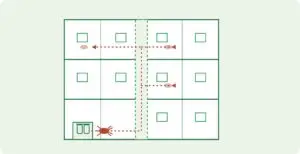
Beyond the legal position, short-term letting changes how a building operates. Security is the big one: guests with access credentials who aren’t residents, doors held open for arrivals, and strangers in corridors nobody recognises. Then there’s the wear — lifts, lobbies and corridors carrying constant luggage traffic and turnover cleaning. Noise and behaviour from guests who have no stake in the community. Waste and rubbish out of rhythm with collection. And the harder-to-measure loss of a building’s sense of neighbourliness when a portion of it is effectively a hotel.
Managing It Well, Whatever the Building Decides
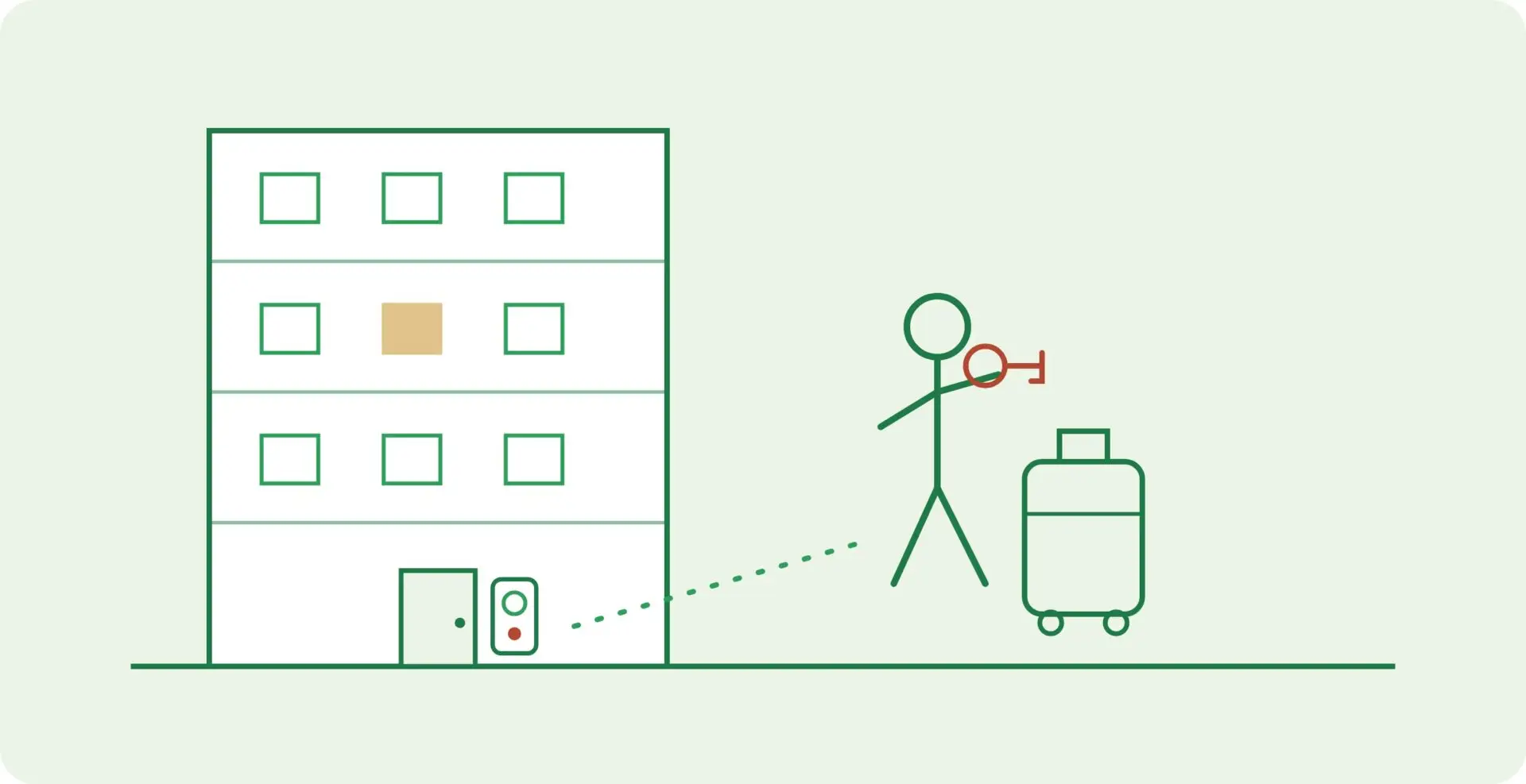
Whether a building restricts non-hosted letting or lives with it, the practical management is the same set of things: controlling access credentials tightly so guest keys and fobs don’t proliferate unaccounted-for, watching entry points where guests are let in, holding hosts to the noise, waste and behaviour standards the Code requires, keeping the common areas maintained against heavier traffic, and giving residents a clear path to report problems and get a response. Buildings that manage these actively cope with short-term letting far better than those that simply resent it.
Where a Building Manager Fits In
This is squarely operational. We control and audit access credentials so guests don’t accumulate keys and fobs, keep an eye on entry security, respond to noise and behaviour complaints and hold hosts to their obligations, manage the extra wear and waste, and give the committee a clear picture of what’s actually happening in the building. The by-law decision, any special resolution, and formal enforcement sit with the owners corporation and strata manager — but the day-to-day reality of short-term letting is lived on the ground, and that’s where a building manager makes the difference between a managed situation and an unmanaged one.
Frequently Asked Questions
Can our owners corporation ban Airbnb?
Partly. Under NSW law, an owners corporation can pass a by-law, by special resolution, prohibiting non-hosted short-term letting where the lot is not the host’s principal place of residence — which covers most investment-apartment Airbnbs. It cannot ban hosted letting where the owner genuinely lives there, or stop an owner letting their real home while temporarily away.
What is the 180-day cap?
In Greater Sydney, non-hosted short-term letting is limited to 180 days in each 12-month registration period. Bookings of 21 or more consecutive days are exempt from the count. Hosted letting isn’t subject to the same cap. The Government has been reviewing the cap and a reduction has been under consideration, so confirm the current position.
Do short-term letting hosts have to be contactable?
Yes. Under the mandatory Code of Conduct, hosts must manage noise, waste and anti-social behaviour, respond to complaints, and provide a 24/7 contact number for guests and neighbours. Serious or repeated breaches can result in a listing on the STRA Exclusion Register, which effectively bans them.
What’s the biggest problem short-term letting causes in buildings?
Security, usually — access credentials spreading to people who aren’t residents, doors held open for arriving guests, and strangers in the building nobody recognises. Noise, extra wear on lifts and common areas, and waste out of rhythm with collection follow close behind. Tight access control and active management address most of it.
Short-Term Letting Under Control
Building Management Australia is a Sydney building management firm — not a strata agent. Controlling access credentials, watching entry security, responding to guest noise and behaviour, and managing the extra wear short-term letting brings is core building-management work, and we handle it alongside your strata manager, who leads on by-laws and enforcement.
If short-term letting is causing problems in your building, request a proposal at bmaus.com.au or email Andrew directly at andrew@bmaus.com.au.
About the Author
Andrew Veron is the founder of Building Management Australia (BMA), an independent Sydney building management firm established in 1995. BMA is a building management company — not a strata agent — providing on-site and visiting building management, facilities management, concierge, cleaning and valet services to residential, commercial and mixed-use properties. Over the past 30 years, Andrew and the BMA team have managed buildings across the Eastern Suburbs, North Sydney, Inner Sydney, Parramatta and the Sydney CBD, with assets currently valued in excess of $3 billion under management. Because BMA is independent of any strata management firm, committees receive unbiased advice and transparent contractor relationships. Reach Andrew at andrew@bmaus.com.au or bmaus.com.au.
This article is general information only and is not legal advice. Short-term letting rules in NSW are set by planning, fair trading and strata legislation, are under review and may change; owners corporations and owners should confirm the current position and obtain advice specific to their circumstances.