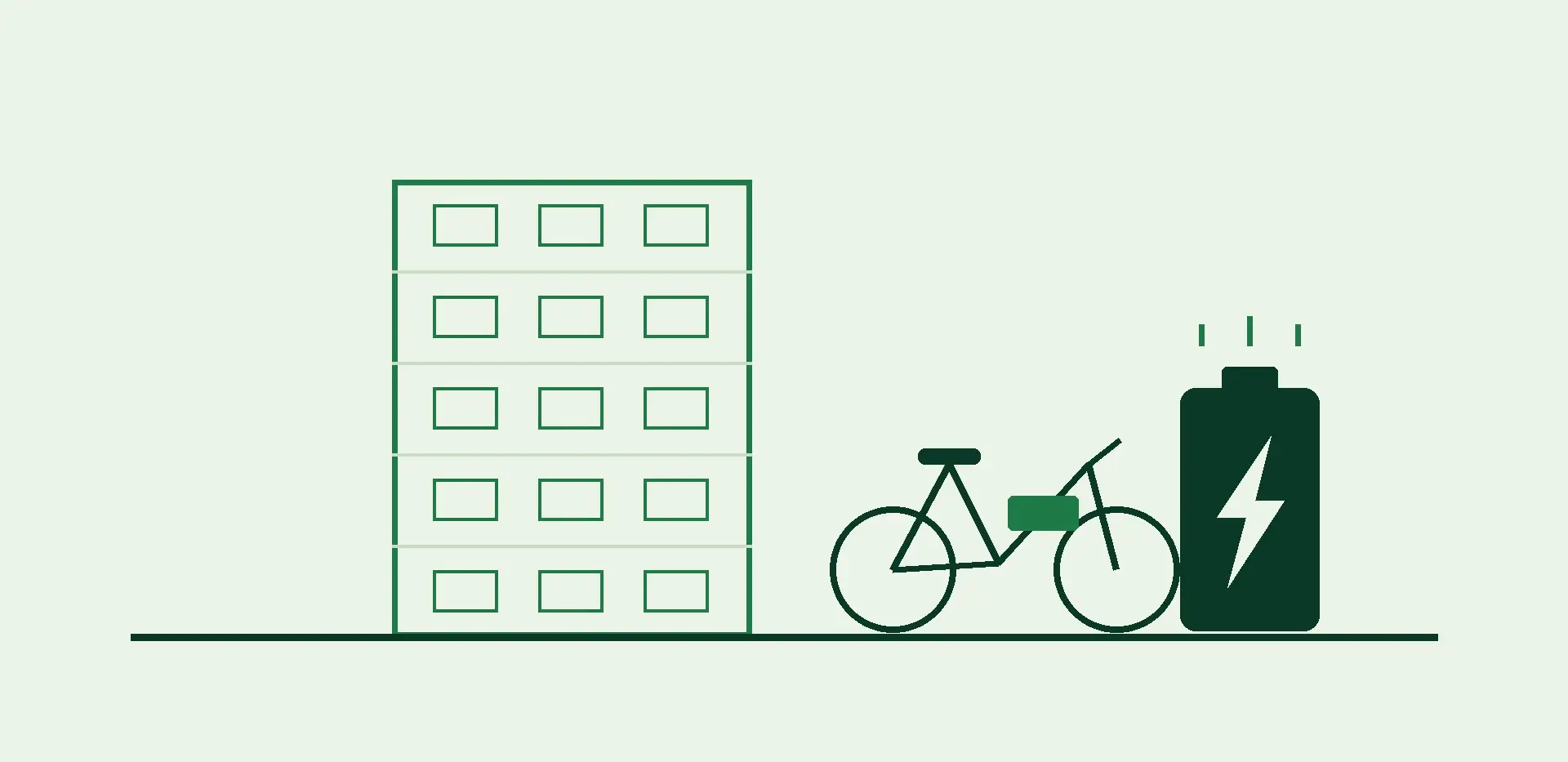
There’s a fire risk quietly building in Sydney apartment buildings, and it isn’t the electric car in the basement — it’s the e-bike charging in the upstairs hallway.
Lithium-ion batteries in e-bikes and e-scooters have become the fastest-growing fire risk in NSW, and the fires they cause are fast, toxic and extremely hard to put out. After thirty years managing Sydney buildings, this is one of the emerging risks I’d most want a committee to get ahead of. Here’s what’s going on, and what a building can actually do about it.
The Risk That Actually Matters
It’s worth being precise about where the danger lies, because the public conversation often points at the wrong thing. Fire and Rescue NSW’s data tells the story starkly: of the lithium-ion battery fires it attended in its most recent annual reporting, well over a hundred involved e-bikes and e-scooters — and none involved electric vehicles. The car plugged in downstairs, professionally installed, is not the problem. The personal mobility device charging near a doorway upstairs is.
The reason is quality and control. Electric vehicles use high-grade battery cells in protected packs subject to stringent testing. Many e-bikes and e-scooters — especially cheaper models and aftermarket replacement batteries and chargers bought online — are not built to anything like the same standard.
Why These Fires Are So Dangerous
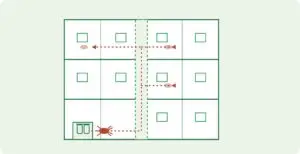
Lithium-ion batteries can enter what’s called thermal runaway — a self-sustaining reaction that, once started, is very difficult to stop. These fires ignite rapidly, burn fiercely, release toxic and flammable gases, and can reignite hours after appearing to be out. Water alone does not stop thermal runaway, and a building’s standard fire suppression may not effectively control one. In an apartment building, a battery fire in the wrong place fills escape routes with toxic smoke in minutes.
Where the Risk Concentrates in an Apartment Building
The danger isn’t the device so much as where it’s charged and stored. The problem spots are predictable:
- Corridors and stairwells — charging here blocks the very escape routes residents need, and a fire here can trap people upstairs.
- Bike rooms and basements — enclosed spaces where a fire can grow before it’s noticed and where suppression is limited.
- Inside apartments overnight — charging unattended while residents sleep, when nobody will smell the smoke in time.
- Balconies — exposed to heat and weather that can damage batteries.
A device charging in a corridor isn’t just untidy — it can breach the building’s fire egress requirements, because that corridor forms part of the required path of travel under the fire safety schedule. That’s an enforceable point, not an aesthetic one.
The New Product Rules
The regulatory picture has tightened. Since 1 February 2026, e-micromobility devices and their lithium-ion batteries must be tested, certified and marked before they can be sold in NSW, on top of existing product standards (chargers were already covered). NSW Fair Trading maintains a register of certified products and can pursue significant penalties for breaches. This helps at the point of sale — but it doesn’t touch the non-compliant devices and batteries already in buildings, which is why what a building does still matters.
What a Building Can Actually Do
Committees that manage this well tend to take a handful of practical steps:
- Introduce a clear by-law. The Strata Schemes Management Act allows by-laws regulating where e-bikes and e-scooters can be stored and charged — keeping them out of corridors, stairwells and other escape routes.
- Designate safe charging and storage. Where practical, a well-ventilated area away from exits and living spaces — some buildings are moving toward fire-rated charging lockers or dedicated outdoor charging points.
- Educate residents. Use certified devices and chargers only, don’t charge unattended or overnight, don’t use swollen or damaged batteries, and charge on hard, non-flammable surfaces away from exits.
- Provide for safe disposal. Damaged and end-of-life batteries must never go in household bins — they cause fires in waste trucks — and should go to a Community Recycling Centre.
- Review insurance. Lithium battery fires are an emerging, high-cost claim area, and some insurers are tightening terms — worth checking the building’s cover and any conditions.
Where a Building Manager Fits In
This is very much building-management territory, because it’s about the physical building and its day-to-day operation. We help keep escape routes clear of charging devices, manage designated storage and charging arrangements, communicate safety practices to residents, keep an eye out for damaged batteries and unsafe charging, coordinate with the strata manager on introducing and enforcing a by-law, and work with fire services where needed. The owners corporation makes the by-law and insurance decisions; the building manager makes the day-to-day reality safe. Given how fast this risk is growing, being proactive now is far cheaper than reacting to an incident later.
Frequently Asked Questions
Are e-bikes really more of a fire risk than electric cars?
In apartment buildings, yes. Fire and Rescue NSW data shows e-bikes and e-scooters account for a large share of lithium-ion battery fires, while electric vehicles accounted for none in the most recent reporting. EVs use higher-grade, better-protected batteries and are professionally installed; many e-bikes and e-scooters — particularly with cheap aftermarket batteries and chargers — are not.
Can our owners corporation ban e-bike charging in common areas?
An owners corporation can generally make a by-law regulating where these devices are stored and charged — for example, keeping them out of corridors and stairwells that form escape routes. An outright ban on ownership is harder and more contentious; the practical focus is on safe charging and storage rather than prohibition. Get specific advice on wording.
Where should e-bikes and e-scooters be charged?
In a well-ventilated area away from exits and living spaces, on a hard non-flammable surface, using only certified chargers, and never unattended or overnight. Corridors, stairwells and doorways are the worst places, because a fire there blocks escape.
What do we do with a damaged or swollen battery?
Treat it as hazardous. Don’t use or charge it, keep it away from combustible materials, and never put it in a household bin — damaged lithium batteries cause fires in waste collection. Take it to a Community Recycling Centre for safe disposal.
Get Ahead of This Risk in Your Building
Building Management Australia is a Sydney building management firm — not a strata agent. Keeping escape routes clear, managing safe charging and storage, educating residents and coordinating with fire services is core building-management work, and we handle it alongside your strata manager, who leads on by-laws and insurance.
If e-bikes and e-scooters are multiplying in your building, request a proposal at bmaus.com.au or email Andrew directly at andrew@bmaus.com.au.
About the Author
Andrew Veron is the founder of Building Management Australia (BMA), an independent Sydney building management firm established in 1995. BMA is a building management company — not a strata agent — providing on-site and visiting building management, facilities management, concierge, cleaning and valet services to residential, commercial and mixed-use properties. Over the past 30 years, Andrew and the BMA team have managed buildings across the Eastern Suburbs, North Sydney, Inner Sydney, Parramatta and the Sydney CBD, with assets currently valued in excess of $3 billion under management. Because BMA is independent of any strata management firm, committees receive unbiased advice and transparent contractor relationships. Reach Andrew at andrew@bmaus.com.au or bmaus.com.au.
This article is general information only and is not legal advice. Product-safety rules, by-law powers and insurance terms in this area are evolving; owners corporations should confirm current requirements and obtain advice specific to their building.