Waste is one of those building functions nobody thinks about until it goes wrong — and then it’s all anyone can think about.
A well-run bin room is invisible; a poorly run one is smelly, overflowing, contaminated and the subject of every second complaint. On top of the daily job, a significant change is on the way: NSW is mandating food-waste separation, and apartment buildings will need to adapt. After thirty years managing Sydney buildings, here’s how waste works well, and how to get ahead of what’s coming.
Waste Is a Bigger Job Than It Looks
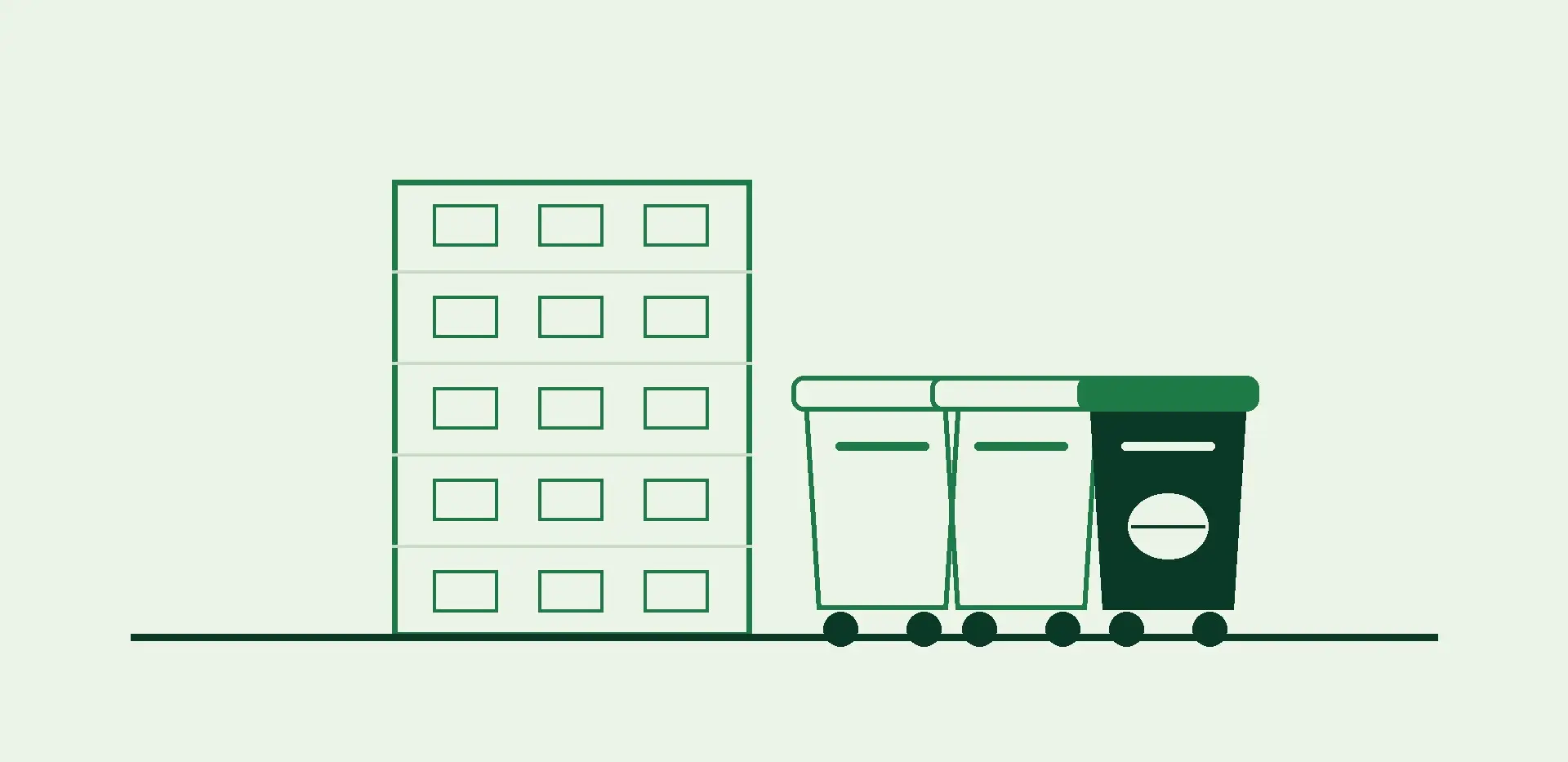
In a house, waste is one bin at the kerb once a week. In an apartment building it’s a genuine operation: shared bin rooms, multiple streams, chutes in some buildings, bulky-waste dumping, contamination management, and coordinating collection so bins are out and back without cluttering common areas or blocking access. Get it right and residents never think about it. Get it wrong and the building smells, attracts pests, and looks neglected — fast.
The Streams to Manage
A typical apartment building juggles several waste streams that all need space, signage and discipline: general waste, commingled recycling, paper and cardboard (a big one in the age of home delivery), garden organics where relevant, e-waste and batteries (which must never go in general bins), and bulky household items that need proper disposal rather than dumping in the bin room. Contamination — the wrong thing in the wrong bin — is the constant enemy, because it can send a whole load to landfill and drive up costs.
FOGO Is Coming to Apartments
The significant change on the horizon is FOGO — Food Organics and Garden Organics. Under NSW legislation, councils must provide household FOGO services by 1 July 2030, rolling out progressively. Importantly for strata, apartment buildings are generally being staged after standalone houses, precisely because multi-unit buildings raise harder questions — shared bin storage, space for an extra stream, access and contamination. Separately, commercial food-waste generators (including hospitality tenancies, relevant to mixed-use buildings) face their own staged obligations, which began for the largest generators on 1 July 2026 and extend to smaller businesses in 2028 and 2030.
The exact timing depends on your council, which is running its own rollout. But the direction is fixed: apartment buildings will need to separate food waste, and that means finding room for another stream, educating residents, and managing a new source of potential contamination and odour.
Why Apartments Are the Hard Case
Food-waste separation is straightforward in a house with a backyard bin. In an apartment building it’s genuinely harder: bin rooms are often already tight, adding a stream means finding space, food organics create odour and pest risk if not managed well, and getting hundreds of residents to separate correctly takes real education and ongoing effort. This is exactly why the rollout stages apartments later — and exactly why buildings that plan early will transition far more smoothly than those that wait for the deadline to arrive.
Getting Ahead of It
The buildings that will handle this well are already thinking about it. Practical early steps:
- Assess the bin room — is there physical space for an additional food-organics stream, or will storage need rethinking?
- Talk to your waste contractor and council about timing, bin sizing and collection frequency for your area.
- Plan resident education early — correct separation is a behaviour change, and behaviour changes take time and repetition.
- Design for contamination and odour management from the start, because food organics are less forgiving than dry recycling.
Where a Building Manager Fits In
Waste is core building-management work, day in and day out. We keep the bin rooms clean and functioning, manage the streams and collection scheduling, tackle contamination and educate residents, handle bulky-waste and e-waste properly, and — with FOGO coming — help the building plan the space, contractor arrangements and resident communication needed to adapt. The owners corporation and strata manager handle the contracts and budget decisions; the building manager makes the system actually work on the ground, and keeps the bin room from becoming the building’s worst feature. Getting ahead of FOGO now, rather than scrambling at the deadline, is the difference between a smooth change and a smelly one.
Frequently Asked Questions
When does FOGO start for apartment buildings in NSW?
NSW councils must provide household FOGO services by 1 July 2030, rolling out progressively — and apartment buildings are generally staged after standalone houses because of the extra complexity around shared bins and space. The exact date depends on your council’s rollout, so it’s worth checking your council’s timetable. Commercial food-waste generators, relevant to mixed-use buildings, face earlier staged obligations that began on 1 July 2026 for the largest generators.
What is FOGO?
FOGO stands for Food Organics and Garden Organics — a waste stream that keeps food scraps and garden waste out of landfill and turns them into compost and soil conditioner. It requires separating food waste at the source into a dedicated bin rather than putting it in the general (red-lid) bin.
What’s the biggest waste problem in apartment buildings?
Contamination — the wrong items in the wrong bins — followed closely by overflow and odour when bin rooms aren’t well managed. Contamination can send an entire recycling load to landfill and raise costs, which is why resident education and active bin-room management matter so much.
How should our building prepare for FOGO?
Start now: assess whether the bin room has space for another stream, talk to your council and waste contractor about timing and logistics, and plan resident education early, since correct separation is a behaviour change. Buildings that prepare ahead of their deadline transition far more smoothly than those that wait.
Want Your Building’s Waste Actually Managed?
Building Management Australia is a Sydney building management firm — not a strata agent. Keeping bin rooms clean and functioning, managing waste streams and collections, tackling contamination and preparing your building for FOGO is core building-management work, and we handle it alongside your strata manager.
If your building’s waste is a recurring headache — or you want to get ahead of FOGO — request a proposal at bmaus.com.au or email Andrew directly at andrew@bmaus.com.au.
About the Author
Andrew Veron is the founder of Building Management Australia (BMA), an independent Sydney building management firm established in 1995. BMA is a building management company — not a strata agent — providing on-site and visiting building management, facilities management, concierge, cleaning and valet services to residential, commercial and mixed-use properties. Over the past 30 years, Andrew and the BMA team have managed buildings across the Eastern Suburbs, North Sydney, Inner Sydney, Parramatta and the Sydney CBD, with assets currently valued in excess of $3 billion under management. Because BMA is independent of any strata management firm, committees receive unbiased advice and transparent contractor relationships. Reach Andrew at andrew@bmaus.com.au or bmaus.com.au.
This article is general information only and is not legal advice. FOGO timing and requirements are set by legislation and individual councils and are being phased in; owners corporations should confirm the current position with their local council and waste provider.