It’s tempting to see cleaning as the easiest line in the budget to trim. It’s also usually a mistake.
How a building presents — its lobby, its lifts, its car park, its gardens — shapes how residents feel about living there, what visitors and buyers think the moment they walk in, and, over time, what the building is worth. After thirty years managing Sydney buildings, I’ve watched presentation quietly make and unmake buildings’ reputations. Here’s why it matters more than it costs, and what a proper program looks like.
Presentation Is Not Vanity
A clean, well-kept building does real work. It tells residents the building is cared for, which encourages them to care for it too. It gives visitors and prospective buyers or tenants a strong first impression — and first impressions of a building are formed in the first thirty seconds, in the lobby and the entrance. And it protects value: a building with a reputation for being well-presented is a building people want to live in, and that desirability underpins prices. Neglect compounds the other way — a tired, grubby common area signals a building that’s let go, and that impression is expensive to reverse.
What a Real Cleaning Program Covers
Good building cleaning is more than a mop through the lobby. A proper program addresses the whole of the common property on an appropriate rhythm:
- Daily and regular. Lobbies, lifts, corridors, entrances, glass and high-touch surfaces — the areas residents and visitors see and touch every day.
- Waste and bin areas. Bin rooms and garbage areas kept clean and managed — one of the fastest ways a building starts to smell and look neglected if it slips.
- Car parks and back-of-house. The areas that get forgotten but accumulate grime, litter and oil — and that residents use constantly.
- Gardens and external presentation. The building’s face to the street, coordinated with grounds maintenance so the whole exterior presents well.
Routine Versus Periodic Work
Alongside the regular clean sits periodic work that keeps a building from slowly dulling: pressure-washing of entrances, driveways and common hard surfaces; window and facade glass cleaning; carpet cleaning in common areas; and deeper attention to the spaces that daily cleaning only maintains. A building that only ever gets the routine clean gradually loses its shine; the periodic program is what keeps it looking genuinely cared for rather than merely tidy.
The Hidden Benefit: Cleaning Catches Problems
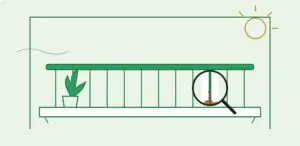
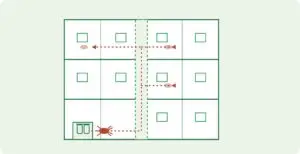
There’s a benefit to good cleaning that rarely gets mentioned: the person cleaning the building is often the first to notice something wrong. A leak beginning under a carpet, a cracked tile, a failing light, a door that isn’t closing, graffiti, a security gate ajar. When cleaning is properly supervised and connected to the building’s management, those observations get reported and acted on early — which ties cleaning directly to maintenance and cost control. Cleaning isn’t just presentation; it’s a set of eyes on the building every single day.
Standards and Supervision
The difference between a building that presents well and one that doesn’t is rarely the cleaning contractor’s effort on any given day — it’s whether there are clear standards and someone checking them. A defined scope, a schedule, and supervision that holds the work to standard is what keeps quality consistent rather than drifting. Unsupervised cleaning, like unsupervised anything in a building, quietly declines until someone complains.
Where a Building Manager Fits In
Cleaning and presentation are core building-management work. We set the cleaning scope and schedule, engage and supervise the cleaning and grounds contractors, hold the work to a consistent standard, coordinate the periodic deep work, and — importantly — make sure what the cleaners notice gets reported and fixed. The owners corporation sets the budget and expectations; the building manager makes sure the building actually presents the way residents deserve, day after day.
Frequently Asked Questions
Is cleaning really worth protecting in the budget?
Usually yes. Presentation supports resident satisfaction, first impressions and ultimately property values, and good cleaning also catches maintenance problems early. Cutting cleaning tends to be a false economy — the savings are small and visible, while the costs show up later in reputation and deferred repairs.
How often should common areas be cleaned?
It depends on the building’s size and traffic, but high-use areas — lobbies, lifts, entrances — generally need daily or near-daily attention, with less-used areas on a regular cycle and periodic deep cleaning (pressure washing, carpets, glass) scheduled through the year. The right frequency matches the building’s use.
What’s the difference between cleaning and grounds maintenance?
Cleaning covers the internal and hard-surface common areas — lobbies, lifts, corridors, bin rooms, car parks. Grounds maintenance covers gardens and landscaping. They’re related and best coordinated together so the whole building, inside and out, presents consistently.
How do we keep cleaning quality consistent?
Clear standards, a defined scope and schedule, and supervision. The most common reason cleaning quality slips isn’t a bad contractor — it’s the absence of anyone checking the work against a standard. Supervision is what keeps it consistent.
Want Your Building to Present the Way It Should?
Building Management Australia is a Sydney building management firm — not a strata agent. Alongside building management, we provide cleaning, valet and presentation services — setting the standard, supervising the work, and making sure what our teams notice on the ground gets fixed.
If your building’s presentation has slipped, or you want it held to a consistent standard, request a proposal at bmaus.com.au or email Andrew directly at andrew@bmaus.com.au.
About the Author
Andrew Veron is the founder of Building Management Australia (BMA), an independent Sydney building management firm established in 1995. BMA is a building management company — not a strata agent — providing on-site and visiting building management, facilities management, concierge, cleaning and valet services to residential, commercial and mixed-use properties. Over the past 30 years, Andrew and the BMA team have managed buildings across the Eastern Suburbs, North Sydney, Inner Sydney, Parramatta and the Sydney CBD, with assets currently valued in excess of $3 billion under management. Because BMA is independent of any strata management firm, committees receive unbiased advice and transparent contractor relationships. Reach Andrew at andrew@bmaus.com.au or bmaus.com.au.
This article is general information only. Cleaning scopes, budgets and property-value outcomes vary with each building’s circumstances; owners corporations should assess their own building’s needs when making budgeting decisions.