A balustrade is the only thing between a resident and a long fall — and one of the least inspected components in most apartment buildings.
It sits outside in the weather for decades, corroding where nobody can see, and gives very little warning before it fails. After thirty years managing Sydney buildings, balconies are near the top of my list of things worth checking properly — because the failure mode here isn’t an inconvenience or a cost. Here’s what buildings should understand.
Why Balconies Deserve Serious Attention
Balconies are exposed structures carrying people, furniture and sometimes crowds, permanently subjected to sun, salt and rain — and in Sydney, coastal air accelerates corrosion considerably. They’re also the part of the building residents modify most: adding planters, furniture, screening and storage, often without much thought about weight, drainage or what’s being drilled into. The combination of high consequence, constant exposure and casual modification is why balconies reward inspection and punish assumption.
Who’s Responsible
Generally, a balcony’s structure, balustrades and waterproofing are common property and therefore the owners corporation’s responsibility, while the lot owner handles routine cleaning and day-to-day care of the space they use. That means balustrade safety — the serious part — sits with the owners corporation, and it’s not a duty that can be quietly delegated to whoever lives there. As always, the specifics depend on your registered strata plan.
Balustrade Failure Is Usually Invisible
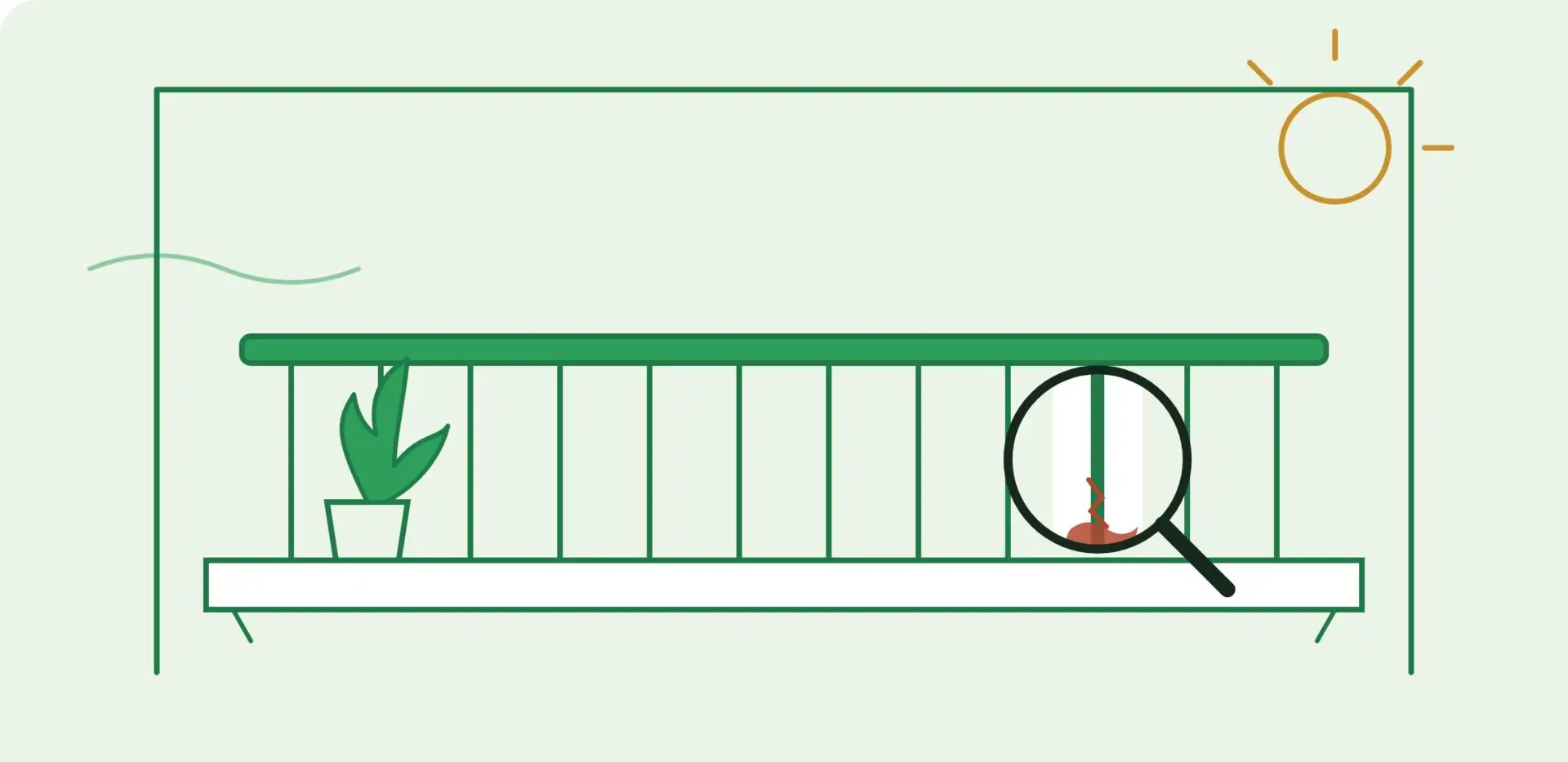
The dangerous thing about balustrades is how they fail. Metal balustrades corrode at their fixings and where they enter the concrete — exactly the points you can’t see — and a balustrade that looks fine can be substantially compromised underneath. Concrete around fixings can spall as embedded steel rusts and expands. Glass balustrades have their own considerations around the type of glass, its fixings and interlayers. None of this announces itself; a balustrade generally looks completely normal right up until it doesn’t hold.
This is why periodic inspection by a qualified professional — not a visual glance from the doorway — is the only reliable way to know. Balustrade integrity is a genuine engineering question, and it’s one worth paying a professional to answer.
The Climbable Object Problem
There’s a second balcony risk that’s entirely preventable: anything a child can climb. Furniture, planters, boxes and storage placed against a balustrade defeat its height completely. It’s the same principle behind window safety devices and pool fencing — the barrier only works if there’s nothing to climb on. This is one of the simplest and most valuable things to watch for in a building with families, and it costs nothing but attention.
Loads, Planters and Drainage
Balconies are designed for a load, and residents don’t always think in those terms. Heavy planters, large water features, spa baths and dense storage can exceed what a balcony was built to carry. Planters bring a second problem: water. Sitting soil against a balcony surface holds moisture against waterproofing and drainage that was never designed for it, which is a slow route to membrane failure and a leak into the apartment below — and, because that membrane is typically common property, the building’s problem, not just the owner’s. Balcony drainage that’s blocked or overwhelmed does the same thing faster.
Enclosures and Modifications
Residents often want to enclose or modify balconies — screening, awnings, permanent enclosures. These typically affect the external appearance and sometimes the structure, which generally makes them major works requiring proper approval, not something an owner can simply install. Beyond the approval question, unapproved modifications can compromise drainage, waterproofing and even balustrade integrity if things are fixed into the wrong places. Getting these properly approved and properly done is far cheaper than unwinding them later.
Where a Building Manager Fits In
Balconies need someone actually looking at them. We arrange and act on periodic balustrade and balcony inspections by qualified professionals, watch for the everyday risks — climbable objects near balustrades, overloaded or leaking planters, blocked drainage, corrosion showing at fixings — keep unapproved modifications from quietly appearing, and coordinate the repairs when something is found. The owners corporation holds the duty and funds the work, and engineers do the technical assessment; regular, active building management helps problems get noticed earlier, while they’re more likely to still be repairs rather than incidents. On balconies, that early attention isn’t really about saving money — it’s about the seriousness of what can go wrong.
Frequently Asked Questions
Who is responsible for balconies in a strata building?
Generally the owners corporation is responsible for the balcony’s structure, balustrades and waterproofing as common property, while the lot owner handles routine cleaning and day-to-day care. Balustrade safety in particular sits with the owners corporation. Your registered strata plan governs the specifics.
How do we know if our balustrades are safe?
You generally can’t tell by looking, which is the problem. Metal balustrades corrode at their fixings and where they enter concrete — the points you can’t see — so a balustrade can look fine while being substantially compromised. Periodic inspection by a qualified professional is the only reliable way to know.
Can residents put planters and furniture on their balcony?
Generally yes, within reason, but two things matter: nothing should be climbable near a balustrade, especially in buildings with children, and heavy planters or features can exceed the balcony’s design load and hold moisture against waterproofing that wasn’t designed for it. Both are avoidable with a bit of awareness.
Can an owner enclose their balcony?
Usually not without proper approval — enclosures and similar modifications typically affect the building’s external appearance and sometimes its structure, which generally makes them major works requiring formal approval. Beyond approval, badly done modifications can compromise drainage, waterproofing and balustrade fixings.
Get Your Balconies Properly Checked
Building Management Australia is a Sydney building management firm — not a strata agent. Arranging and acting on balcony and balustrade inspections, watching for climbable objects, overloaded planters and blocked drainage, and coordinating repairs before problems become incidents is core building-management work, and we handle it alongside your strata manager.
If your building’s balustrades haven’t been properly inspected, request a proposal at bmaus.com.au or email Andrew directly at andrew@bmaus.com.au.
About the Author
Andrew Veron is the founder of Building Management Australia (BMA), an independent Sydney building management firm established in 1995. BMA is a building management company — not a strata agent — providing on-site and visiting building management, facilities management, concierge, cleaning and valet services to residential, commercial and mixed-use properties. Over the past 30 years, Andrew and the BMA team have managed buildings across the Eastern Suburbs, North Sydney, Inner Sydney, Parramatta and the Sydney CBD, with assets currently valued in excess of $3 billion under management. Because BMA is independent of any strata management firm, committees receive unbiased advice and transparent contractor relationships. Reach Andrew at andrew@bmaus.com.au or bmaus.com.au.
This article is general information only and is not legal or engineering advice. Balcony and balustrade safety is a technical matter; owners corporations should engage qualified professionals to assess their building and obtain advice specific to their circumstances.