The first EV charging request lands, the committee asks an electrician to take a look, and the answer comes back: ‘fine for one car, but not for ten’.
That moment — when a simple charger request turns out to be a building-wide electrical question — is happening in Sydney strata buildings every week now. After thirty years managing buildings, my advice is the same to every committee: treat EV charging as a planning question, not a one-off approval. Here’s what NSW committees need to know in 2026.
Why This Is Suddenly Everyone’s Problem
EV ownership has tipped from novelty to mainstream, and most of that charging happens at home. For people in apartments, ‘home’ is a strata car park — which means the requests now arrive whether or not the building is ready for them. The committees coming out ahead are the ones treating the first request as a prompt to plan, rather than a problem to wave through.
The Approval Rules (What’s Current Law)
Two things are already settled law in NSW and worth understanding clearly.
EV charging is ‘sustainability infrastructure’
Under the Strata Schemes Management Act, EV charging infrastructure is classified as sustainability infrastructure. The practical effect is significant: a resolution to install it passes unless 50% or more of the votes cast are against it — effectively a simple majority, rather than the 75% special resolution that common-property changes used to require. That single change removed the biggest historical barrier, which was committees blocking installs by holding them to the higher threshold.
Aesthetics alone can’t be the reason for ‘no’
Since 1 July 2025, by-laws can no longer block an EV charger installation on aesthetic grounds alone, with a carve-out for heritage-listed buildings and heritage conservation areas. Owners corporations are also now expected to factor EV charging into their capital works fund planning.
It’s also worth knowing that work affecting common property still generally needs the owners corporation’s authorisation — most car parks are common property or rely on shared electrical infrastructure — so an owner can’t simply engage an electrician and start drilling.
The ‘Right to Charge’ Reform (Proposed, Not Yet Law)
There is a further reform moving through Parliament that committees should have on their radar. The Strata Schemes Legislation Amendment (Miscellaneous) Bill currently before Parliament — at the time of writing, passed by the Legislative Assembly and before the Legislative Council, so not yet in force — would create a ‘right to charge’. If enacted in its current form, the broad shape is:
- A lot owner could install EV charging in their car space (including a simple power socket) by giving written notice to the strata committee.
- The committee would have three months to respond; if it doesn’t, the installation is taken to be approved.
- The committee could object only in writing and for reasonable reasons, with NCAT able to step in if an objection is unreasonable.
- The owner would pay for everything and indemnify the owners corporation for any damage to common property.
Because this is still a bill, treat the detail as indicative until it’s passed and commences. Your strata lawyer is the right source for its final form. The direction of travel, though, is clear: it will get easier for owners to install, and harder for committees to say no — which makes planning ahead more valuable, not less.
The Real Trap: Electrical Capacity
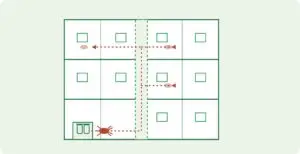
Approval is the easy part. The hard part is physics. Most apartment buildings were never designed for dozens of cars drawing power overnight, and granting approvals one by one quietly builds toward a problem: a wave of chargers in the same year can overload a switchboard that was fine for one or two.
The solution is a load management system — technology that shares the building’s available electrical capacity dynamically across all the chargers, slowing or pausing charging at peak times so the building never overloads. Getting this right early avoids an expensive emergency switchboard upgrade later, and avoids residents arguing over who gets to charge. The starting point is a feasibility or load management study that tells you what your building can actually support before any charger goes in.
Grants Can Cover a Lot of It
The NSW Government’s EV Ready Buildings program, run by Energy NSW, has co-funded the retrofit of the electrical ‘backbone’ that makes chargers scalable. Under the structure that has applied, an owners corporation pays a fixed contribution toward a Stage 1 feasibility study with the government covering the rest, then Stage 2 co-funds the infrastructure installation — funding a large share of eligible costs up to a cap, for eligible registered residential strata schemes.
Grant rounds and figures change — the first major round was exhausted in late 2025, with further cycles flagged — so the practical step is to check the current status with Energy NSW before relying on specific amounts. The key insight is that this funding is about the building’s electrical infrastructure, not buying individual chargers.
Get Ahead of It: Three Things to Do Now
Whether or not a request has arrived, the committees that handle this well do the same three things early.
- Get an electrical capacity assessment. Know what your building can actually support before the first formal request, not after the tenth.
- Develop a building-wide EV charging policy. A clear, fair framework agreed in advance is far easier than improvising one under pressure as requests stack up.
- Plan the infrastructure, not just the approval. Decide whether you’re enabling individual installs or building a shared charging backbone — and fold it into your capital works planning.
A Note on Fire Safety and Insurance
Two concerns come up constantly, and both are manageable. On fire safety, the risk from EV chargers is often overstated; good practice includes a master isolation switch accessible from the fire panel, collision protection for the equipment, and installation to the relevant wiring standards. On insurance, major strata insurers have generally not treated compliant EV charging as a rate or risk change — though it’s always worth confirming with your own insurer before installation.
Where a Building Manager Fits In
EV charging is operational delivery as much as it is governance, and that delivery is the building manager’s domain. We coordinate the feasibility and load studies, manage the electrical contractors, oversee installation on common property, run the day-to-day load management system, handle resident access and ongoing maintenance, and keep the building’s charging policy working in practice. The committee and strata manager handle the motions, by-laws and grant approvals; the building manager makes the infrastructure actually happen and keeps it running. Planning this together, before the requests pile up, is what separates the buildings that handle EV charging smoothly from the ones that lurch from request to request.
Frequently Asked Questions
Can our committee just refuse EV charger requests?
Not freely. EV charging is classified as sustainability infrastructure in NSW, so installation resolutions pass on a simple majority rather than a 75% special resolution, and since July 2025 aesthetics alone can’t justify a refusal (heritage excepted). A proposed ‘right to charge’ reform, not yet law at the time of writing, would further limit a committee’s ability to object. Outright refusal is increasingly hard to sustain.
Who pays for an EV charger in a strata building?
It depends on the model. For an individual install in one car space, the owner typically pays. For shared building-wide infrastructure, the owners corporation usually funds it — often via the capital works fund or a special levy, frequently with grant co-funding — and recovers running costs through usage fees. Under the proposed right-to-charge reform, an owner installing in their own space would pay for it and indemnify the owners corporation.
What’s the biggest mistake committees make?
Approving chargers one at a time without thinking about total electrical capacity. The fix is a load management system and a feasibility study up front, so the building can scale to many chargers safely instead of hitting a wall after a handful.
Is there government funding available?
There has been, through the NSW EV Ready Buildings program, which co-funds feasibility studies and infrastructure for eligible strata buildings. Rounds and amounts change, so check the current position with Energy NSW. The funding targets the building’s electrical infrastructure rather than individual chargers.
Planning for EVs in Your Building?
Building Management Australia is a Sydney building management firm — not a strata agent. We help committees get ahead of EV charging: coordinating capacity assessments and load studies, managing the electrical contractors and installation, running the load-management system day to day, and keeping a fair charging policy working — alongside your strata manager, who handles the motions and approvals.
If EV requests are starting to arrive in your building, request a proposal at bmaus.com.au or email Andrew directly at andrew@bmaus.com.au.
About the Author
Andrew Veron is the founder of Building Management Australia (BMA), an independent Sydney building management firm established in 1995. BMA is a building management company — not a strata agent — providing on-site and visiting building management, facilities management, concierge, cleaning and valet services to residential, commercial and mixed-use properties. Over the past 30 years, Andrew and the BMA team have managed buildings across the Eastern Suburbs, North Sydney, Inner Sydney, Parramatta and the Sydney CBD, with assets currently valued in excess of $3 billion under management. Because BMA is independent of any strata management firm, committees receive unbiased advice and transparent contractor relationships. Reach Andrew at andrew@bmaus.com.au or bmaus.com.au.
This article is general information only and is not legal advice. Strata law in this area is changing; some measures described are proposed and not yet in force. Owners corporations should confirm the current law and obtain advice specific to their building.