Most apartment building security fails not because of a clever break-in, but because of a propped-open door, a fob that was never deactivated, or a tailgater nobody questioned.
Good security is rarely about expensive technology; it’s about layers that work together and the discipline to maintain them. After thirty years managing Sydney buildings, here are the basics that actually keep a building secure — and the everyday gaps that quietly undermine them.
Security Works in Layers
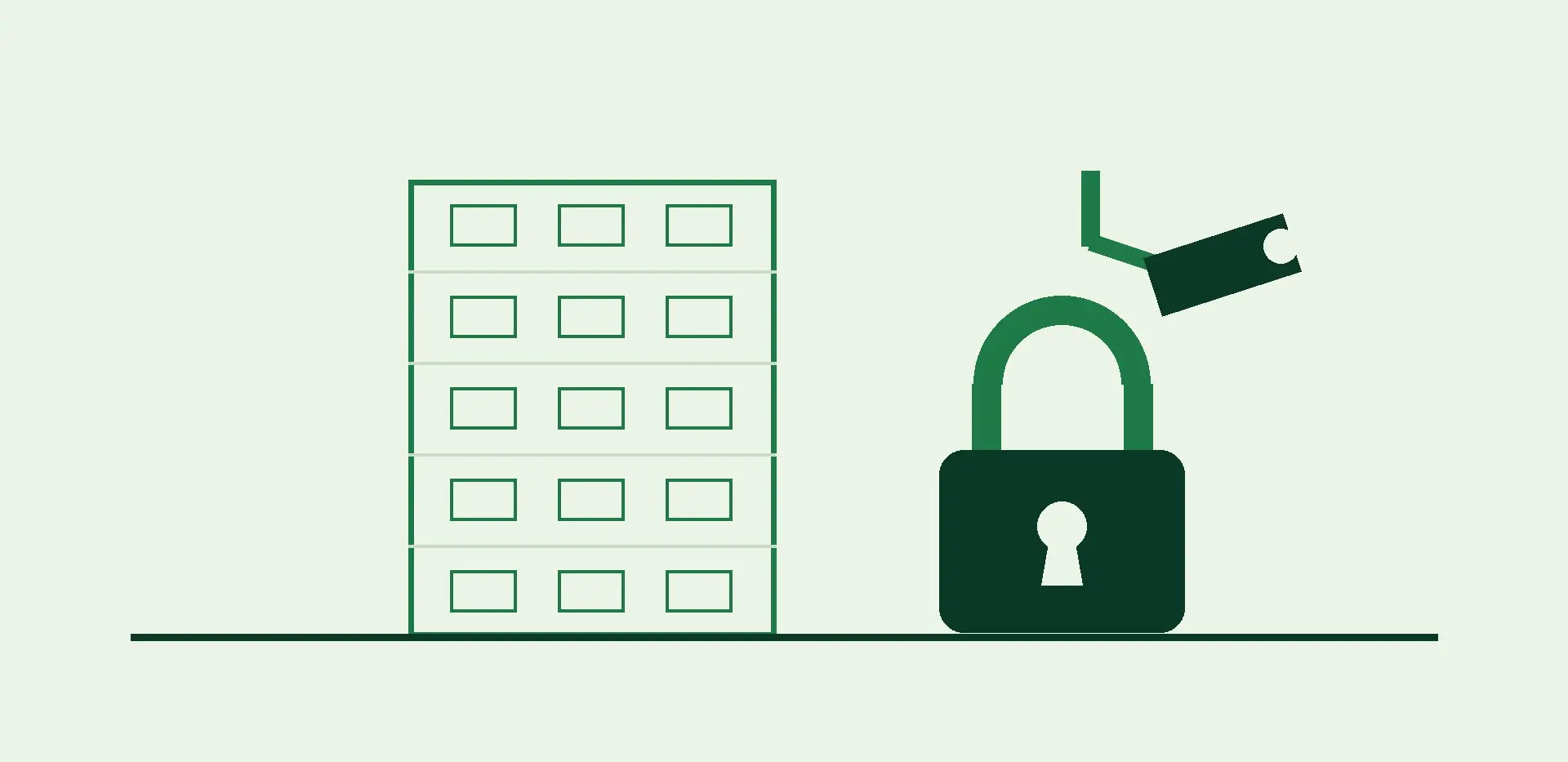
No single measure secures a building. What works is layers — each one catching what the previous one missed — so that a failure at any one point doesn’t leave the building exposed. The core layers in a typical residential building are access control, surveillance, a managed entry point, good lighting and sightlines, and disciplined key and device management. Strong on most layers and weak on one is how most buildings actually get caught out.
Access Control
The front line is controlling who can physically enter. Modern systems use fobs, swipe cards or mobile credentials to control access to the main entrance, car park, lifts and common areas, ideally zoned so a credential only opens what it should. The advantage over old-fashioned keys is control: a lost or compromised credential can be deactivated instantly, and access can be logged. The weakness is discipline — a system is only as good as the register behind it, which brings us to the most common failure of all.
The Key and Device Problem
The single most common security gap in strata buildings is unaccounted-for keys and access devices. Fobs handed out and never returned, master keys whose whereabouts no one is sure of, credentials belonging to former residents, contractors or staff that were never deactivated. Each one is a door that effectively isn’t locked. A proper, maintained access register — who holds what, and deactivating anything unaccounted for — is unglamorous and absolutely fundamental. It’s also exactly the kind of thing that gets lost when a building changes managers without a proper handover.
Surveillance
CCTV at entrances, car parks, lifts and key common areas deters opportunists and provides evidence when something does happen. But cameras are passive — they record, they don’t intervene — so they work best alongside the other layers rather than as a substitute for them. Cameras also need maintaining: footage that isn’t recording, or a system no one has checked in a year, provides a false sense of security exactly when you need it most.
Entry Management: Intercoms and Visitors
Intercom and video-entry systems let residents verify visitors before granting access, which is only as strong as residents’ willingness to use it properly. Managing visitors, deliveries and contractors at the entry point — whether by a concierge, a sign-in process or a controlled access procedure — closes one of the biggest everyday gaps, because most unauthorised entry isn’t forced; it follows someone in through a door held open.
The Everyday Weak Points
In practice, the failures we see most often are mundane:
- Doors propped open for deliveries, removalists or convenience, defeating every other measure.
- Tailgating — someone following a resident through a secured door without a credential of their own.
- Access devices never deactivated after a resident moves out or a contractor finishes.
- Car park and basement entries left unsecured while the front entrance is locked down.
- Maintenance lapses — a broken gate latch, a failed camera, a faulty door closer — left unrepaired.
None of these need new technology to fix. They need attention, and someone whose job it is to notice.
Balancing Security With Living There
Security has to be liveable. Lock a building down too hard and residents prop doors and share codes out of sheer frustration, which is worse than a lighter touch they’ll actually follow. Surveillance has to respect residents’ privacy and any applicable obligations around how footage is captured and stored. The goal is sensible, layered security that residents accept and use — not a fortress they quietly work around.
Where a Building Manager Fits In
Security is mostly maintenance and discipline, which makes it building-management work. We maintain the access register and deactivate orphaned credentials, keep the physical security — doors, gates, latches, cameras, intercoms — in working order, manage contractor and visitor access, respond to incidents and after-hours alarms, and notice the propped door before it becomes a problem. Upgrades to access-control or CCTV systems are decisions for the owners corporation; keeping the whole thing actually working, day to day, is what a good building manager does.
Frequently Asked Questions
What’s the most common security weakness in apartment buildings?
Unaccounted-for keys and access devices — fobs and credentials that were never returned or deactivated. Each one is effectively an unlocked door. A maintained access register and prompt deactivation are the simplest, highest-impact security measures most buildings overlook.
Are cameras enough to keep our building secure?
No. CCTV deters and records, but it doesn’t intervene, and it needs maintaining to be useful. It works as one layer alongside access control, managed entry and good key discipline — not as a standalone solution.
How do we stop people tailgating into the building?
Mostly through culture and entry management — encouraging residents not to hold secured doors for strangers, and managing visitors, deliveries and contractors at a controlled entry point or front desk. Technology helps, but tailgating is primarily a behaviour and supervision issue.
Should we upgrade to a fob or mobile access system?
Often worth it — credential systems let you deactivate lost access instantly and log entry, which keys can’t. But the system is only as good as the register and discipline behind it. Upgrading the hardware without maintaining the access list solves less than people expect.
Want Your Building’s Security Actually Maintained?
Building Management Australia is a Sydney building management firm — not a strata agent. Keeping access registers current, security hardware working, and entry properly managed is core building-management work, and we handle it alongside your strata manager.
If your building’s security has drifted — or you’re not sure who holds what — request a proposal at bmaus.com.au or email Andrew directly at andrew@bmaus.com.au.
About the Author
Andrew Veron is the founder of Building Management Australia (BMA), an independent Sydney building management firm established in 1995. BMA is a building management company — not a strata agent — providing on-site and visiting building management, facilities management, concierge, cleaning and valet services to residential, commercial and mixed-use properties. Over the past 30 years, Andrew and the BMA team have managed buildings across the Eastern Suburbs, North Sydney, Inner Sydney, Parramatta and the Sydney CBD, with assets currently valued in excess of $3 billion under management. Because BMA is independent of any strata management firm, committees receive unbiased advice and transparent contractor relationships. Reach Andrew at andrew@bmaus.com.au or bmaus.com.au.
This article is general information only and is not legal advice. Surveillance and access-control arrangements may be subject to privacy and other legal obligations; owners corporations should obtain advice specific to their circumstances.